


From simple double-sided boards to three-dimensional rigid-flex circuits: we manufacture printed circuit boards for development, prototypes and series production in Lamspringe, made in Germany. Here you will find an overview of our technologies. If you have questions about the right build-up, we will be happy to advise you personally.
- Single- and double-sided
- Multilayer
- Fine line and vias
- Flex and rigid-flex
- IMS aluminium
- RFID
- Antennas
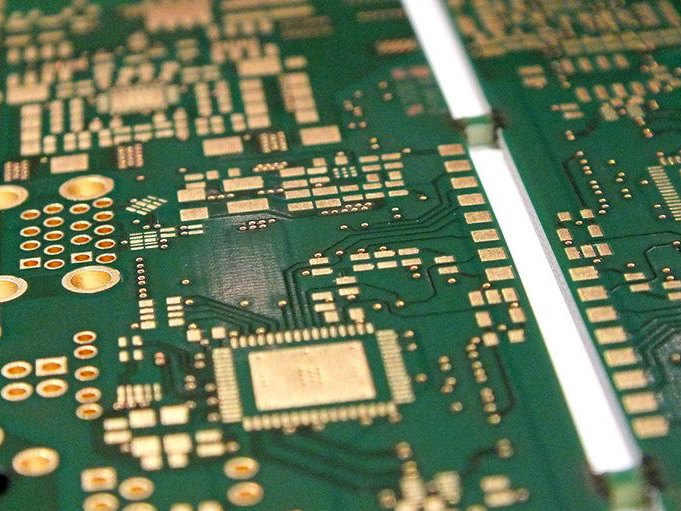
Single- and double-sided PCBs
The classic for robust, cost-effective circuits. On double-sided boards, plated through-holes connect the top and bottom side, allowing a much higher component density than single-sided PCBs.
- Double-sided for through-hole components and SMD, single-sided on request
- Manufactured in the same standardised process as our multilayer boards
- Used in industry, medical technology, measurement technology and defence
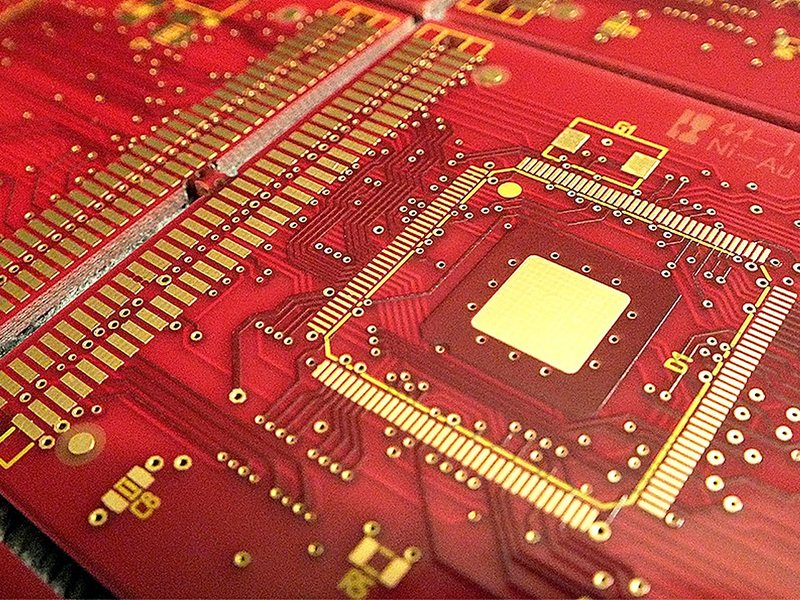
Multilayer
When many SMD components, a demanding power supply and limited space come together, a multilayer board is the solution. More layers mean more freedom in the layout and greater operational reliability.
- Up to 12 layers, focus on 4 to 8 layers
- Typical 4-layer build-up: solder side, ground plane, signal layer and component side
- Inner layers AOI-inspected, laminated with prepregs of defined thickness and glass style under vacuum, pressure and temperature
- Final thickness depending on layer count, requirements and build-up
- Also with blind and buried vias, e.g. as a 6-layer multilayer
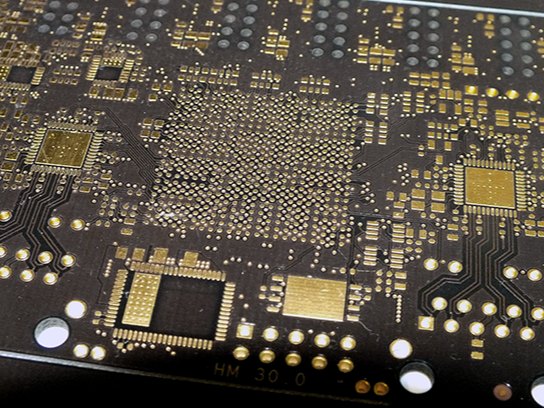
Fine line, blind and buried vias
Miniaturisation is not only achieved with more layers, but with finer structures. With fine-line technology as well as blind and buried vias, we fit more functionality onto less space.
- Track widths and spacing below 100 µm
- Blind vias to connect individual inner layers in a targeted way
- Buried vias to connect inner layers with each other
- Can be combined with multilayer build-ups
Together with you, we check what makes sense and is cost-effective for your design.
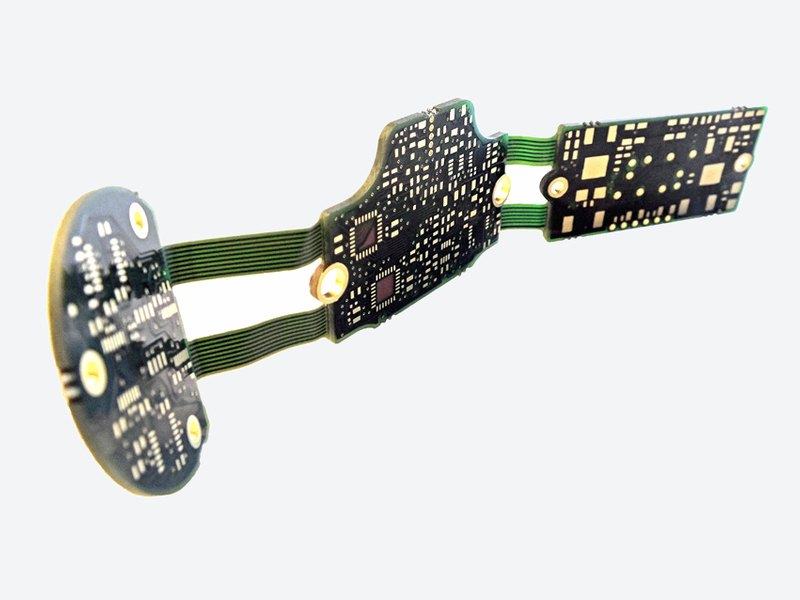
Flex and rigid-flex
The three-dimensional circuit board: rigid sections carry the components, flexible sections connect the assemblies, without connectors and cables. This saves space, weight and assembly effort.
Flexible PCBs
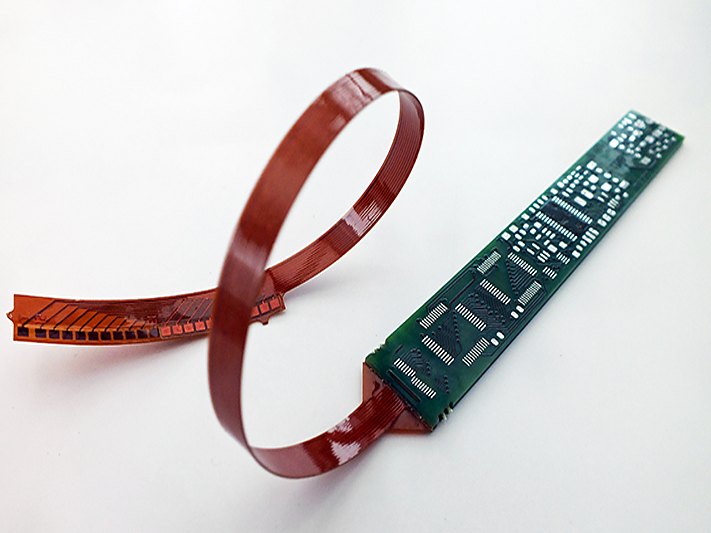
- Single- or double-sided copper-clad polyimide film
- ED copper (electrodeposited) for static bending with few cycles, e.g. during assembly and maintenance
- RA copper (rolled annealed) for dynamic applications
Rigid-flex
- Symmetrical with inner flex layers or asymmetrical with outer flex layers
- High reliability without plug and cable connections, secure contacting and polarity
- More freedom in 3D product design, significantly less assembly effort, lower weight, better signal quality
- Typical applications: medical technology, defence, sensor technology, camera technology
Semi-flex
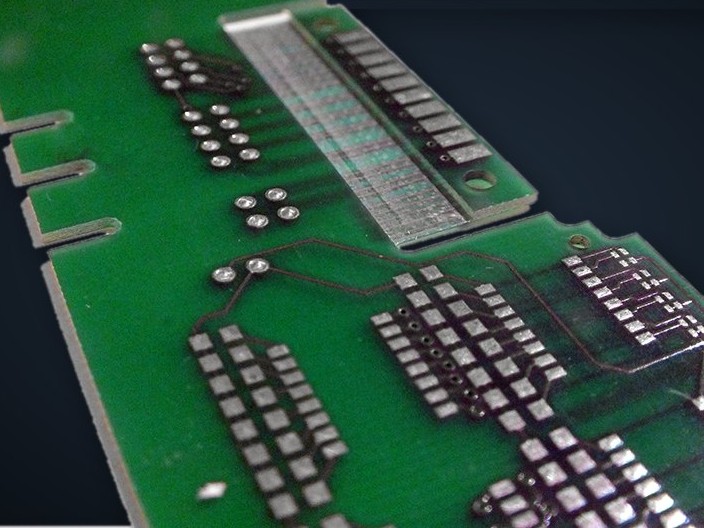
- FR4, partially thinned by depth milling
- Cost-effective alternative for simple bends during assembly, with limited load capacity and bending radius
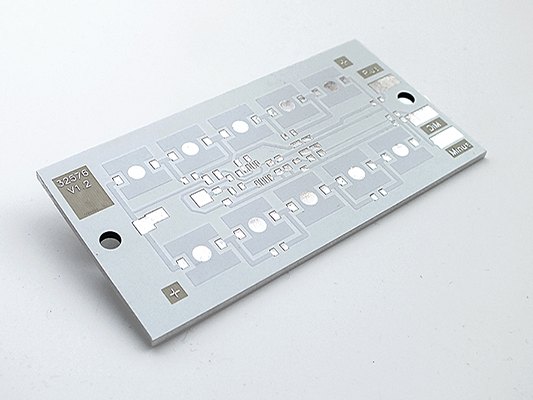
IMS aluminium PCBs
The “cool PCB”: high power and small form factors generate heat. IMS boards dissipate it in a targeted way, improving the stability, performance and service life of your assembly.
- Build-up of aluminium base, thermally conductive dielectric and copper foil
- Various thermal conductivity classes, we advise you on the choice of material
- For power electronics and high-power LEDs
- UV-stable, pure white solder mask for LED applications, also green, black and blue
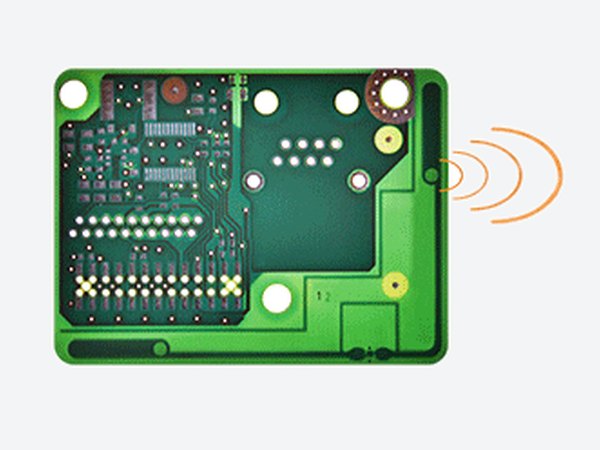
RFID PCBs
A circuit board with its own tamper-proof identity: chip and antenna are embedded in the base material, not soldered on.
- Protection against counterfeiting: the transponder can only be removed or replaced by destroying the PCB
- Unique identification and traceability over the entire product life
- Advantages in production, warehousing, stocktaking and serialisation
- Passive transponders without their own power supply, service life of at least 50 years
- Impinj Monza chips, memory up to 512 bit, read range up to 3 m, various transponder layouts
Developed in the “RFID PCB” project together with the Institute of Transport and Automation Technology (ITA) at Leibniz University Hannover, funded by the Central Innovation Programme for SMEs (ZIM) of the German Federal Ministry of Economics and Technology (BMWi).
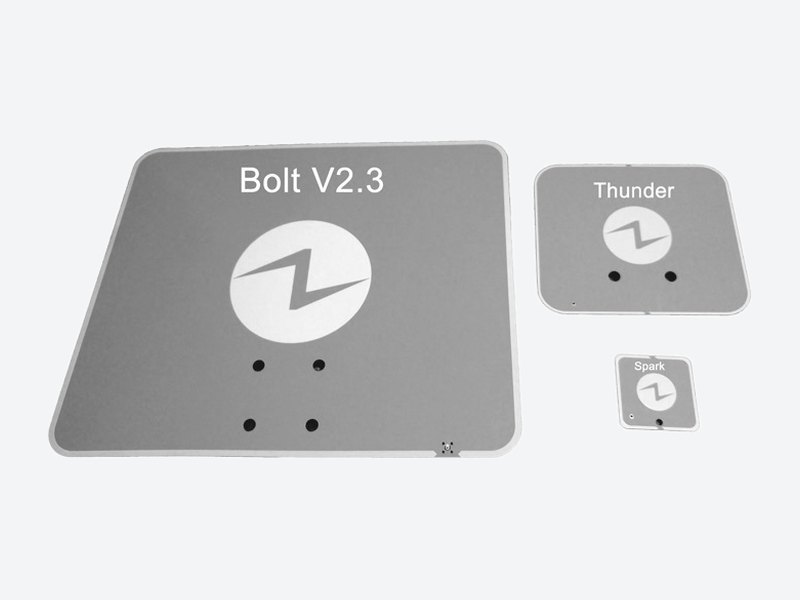
Antennas
Our own Hotoprint products: the Bolt, Thunder and Spark antennas are circularly polarised monopole antennas. They combine the advantages of a monopole antenna with those of a patch antenna.
- For omnidirectional reception in amateur radio, RFID, industry and many other applications
Get in touch – together we will find the best solution.